
Special Immigration Pathways for Highly Skilled Professionals in China
In 2025, China is aggressively positioning itself as a global magnet for high-skilled talent.
With its booming tech sectors in AI, biotechnology, green energy, semiconductors, and advanced manufacturing, the country has rolled out unprecedented immigration reforms to attract STEM professionals, researchers, entrepreneurs, and industry leaders from around the world.
If you’re a software engineer, data scientist, biotech researcher, or senior executive eyeing opportunities in the world’s second-largest economy, China’s special immigration pathways offer faster entry, longer stays, and clearer routes to settlement than ever before.
This comprehensive guide breaks down the key programs—including the groundbreaking new K Visa launching in October 2025—the classic R Talent Visa, national talent plans, regional incentives in Shanghai, Beijing, and Shenzhen, and the pathway to China’s coveted “Green Card” (permanent residence).
Whether you’re exploring job opportunities in China or planning a long-term move, this post covers eligibility, application steps, benefits, challenges, and insider tips to help you navigate the process successfully.
Why China is Prioritizing Highly Skilled Immigration in 2025
China’s economy is shifting from “Made in China” to “Innovated in China.”
The 14th Five-Year Plan and the latest Central Committee decisions emphasize building a high-level talent system.
New policies address demographic challenges and tech rivalry by making entry easier for foreign experts.
Key drivers include:
- Talent shortages in cutting-edge fields.
- Streamlined visas to compete with the US H-1B, Canada’s Express Entry, and Australia’s skilled migration.
- Regional competition—cities like Shanghai and Shenzhen offer extra perks to lure talent.
Foreign professionals in China already number in the hundreds of thousands, but 2025 reforms (including unilateral visa-free policies with 75+ countries and the K Visa) are expected to accelerate inflows dramatically.
The New K Visa: A Game-Changer for Young STEM Talent (Launching October 2025)
One of the most exciting developments is the K Visa, introduced via State Council Order No. 814 and effective October 1, 2025.
Unlike traditional employer-sponsored visas, the K Visa is sponsorship-free and targets young science and technology professionals.
Who qualifies?
- Graduates with at least a bachelor’s degree in STEM (science, technology, engineering, mathematics) from recognized global universities or research institutions.
- Young professionals actively engaged in STEM education, research, or related fields.
Key benefits:
- No job offer or Chinese employer required at application.
- Allows academic exchanges, research, entrepreneurship, business activities, and work.
- More flexible validity, multiple entries, and longer stay durations compared to standard visas.
- Streamlined application process through Chinese embassies/consulates with supporting documents (degree certificates, research records, etc.).
How it compares to other visas:
- Vs. R Visa: K Visa is for early-career “young” talent; R Visa targets established high-level experts.
- Vs. Z/Work Visa: No pre-arranged employment needed—ideal for explorers, startup founders, or researchers scouting opportunities.
Implementation details (eligibility age limits, exact document lists, and pilot cities) will be published by the Ministry of Foreign Affairs before launch.
Early indicators suggest it will rival the US H-1B for flexibility while being uncapped and lower-barrier.
Application tip: Prepare your STEM credentials, CV highlighting research/publications, and a personal statement on contributions to China’s innovation goals. Processing is expected to be faster than traditional routes.
The R Visa (Talent Visa): For High-Level Foreign Experts
The R Visa remains the gold standard for established professionals.
Valid for 5–10 years with multiple entries, it’s designed for “high-level qualified talents or those with urgently needed skills.”
Eligibility (Category A high-end talents):
- Internationally recognized achievements (e.g., Nobel-level, top journal publications, patents).
- Leadership in key industries or national talent programs.
- Confirmation Letter for High-Level Foreign Talents (issued by provincial Foreign Experts Bureaus or central authorities).
Benefits:
- Fast-track work permit and residence permit.
- Priority processing (often 5–10 business days for the confirmation letter).
- Easier family inclusion (spouses and children).
Application process:
- Secure a job offer or institutional invitation.
- Apply for the Confirmation Letter via your Chinese employer/university.
- Submit passport, photo, application form, and confirmation letter at a Chinese embassy/consulate.
- Convert to Z Visa → Foreigner’s Work Permit → Residence Permit upon arrival.
Many universities and tech firms (Huawei, BYD, Tencent) actively sponsor R Visa holders with competitive packages.
China’s Unified Work Permit System: Category A, B & C Explained
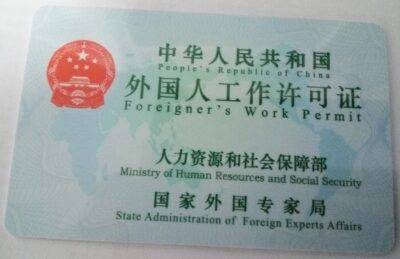
All skilled workers enter via the Foreigner’s Work Permit system (introduced 2017 and refined in 2025–2026):
- Category A (High-end): Points-based or talent criteria. Automatic eligibility for R Visa. Salary thresholds relaxed in Beijing/Shanghai (alternative pathways via achievements or 85+ points score).
- Category B (Professional): Bachelor’s + 2 years experience or certifications. Standard work visa route.
- Category C (Low-skilled): Rarely relevant for highly skilled applicants.
2026 updates in Beijing and Shanghai raised salary thresholds slightly but expanded alternative qualification routes (e.g., international certifications, talent lists).
National Talent Programs: Thousand Talents and Beyond
The Thousand Talents Plan (rebranded National High-end Foreign Experts Recruitment Plan) continues to recruit top global experts.
Benefits include generous research funding, housing subsidies, tax breaks, and priority immigration support.
Other programs:
- Young Thousand Talents (for under-40s).
- Various ministry-specific schemes in AI, quantum computing, and biotech.
Participants often receive direct endorsement for R Visas and accelerated permanent residency.
Regional Talent Programs: Shanghai, Beijing, Shenzhen & Guangzhou Lead the Way
China’s cities compete fiercely for talent:
- Shanghai: New Overseas Talent Residence Permit (2025) replaces older schemes. Valid 1–5 years (up to 10 for top talents in Lingang or Zhangjiang). Path to permanent residence after 3 years continuous work for endorsed professionals. Top-ranked city for net talent inflow in 2025.
- Beijing: Fast-track permanent residence for high-level talents (90-day processing in some zones). Updated salary thresholds and Category A shortcuts.
- Shenzhen: Innovation hub with relaxed rules for tech entrepreneurs. Talent Green Card equivalents and startup visas.
- Guangzhou: Talent Green Card system with import privileges and family benefits.
These programs often layer on top of national visas—e.g., a K or R Visa holder in Shanghai gets extra housing allowances and school enrollment priority for children.
Pathway to Permanent Residence (China Green Card)
China’s “Green Card” (Permanent Residence Permit) is notoriously selective but increasingly accessible for high-level talents:
Main routes for skilled professionals:
- High-level foreign talents (Category A) recommended by authorities → direct or fast-track application.
- 3–4 years continuous work in China + high salary/tax contributions (relaxed to 3 years in some cities for endorsed talents).
- Significant contributions or investment.
- PhD holders or senior executives in priority sectors.
Processing: 90–180 days. Benefits include indefinite stay, work freedom, social security access, and near-citizen rights (except voting).
Spouses and minor children can join. Language proficiency helps but isn’t always mandatory for initial approval.
Pro tip: Use regional “Talent” endorsements to shorten the timeline dramatically.
Step-by-Step Application Guide for Highly Skilled Professionals
- Assess eligibility — Match your profile to K/R/Category A using official points calculators or embassy checklists.
- Secure sponsorship or endorsement — Job offer, university invitation, or talent program acceptance.
- Gather documents — Passport (6+ months validity), degree certificates (notarized/translated), CV, recommendation letters, health certificate.
- Apply for visa — Online via Chinese Visa Application Service Centers or embassies. K Visa expected to have simplified online options.
- Enter China — Convert to work/residence permit within 30 days.
- Renew and upgrade — Aim for permanent residence after 3–5 years.
Common pitfalls: Incomplete translations, missing confirmation letters, or failing health checks. Use licensed immigration consultants or employer HR for complex cases.
Benefits of Relocating to China as a Highly Skilled Professional
- Career growth: World-class labs, massive R&D budgets, and rapid innovation cycles.
- Compensation: Competitive salaries + housing allowances, tax incentives (up to 15% effective rate for talents in some zones).
- Lifestyle: Modern cities with excellent high-speed rail, healthcare, and international schools. Cost of living lower than equivalent Western hubs.
- Family support: Spousal work rights, subsidized education, and healthcare.
- Long-term security: Clear path to permanent residency without language tests in many talent streams.
Challenges and Realistic Considerations
- Language and culture: Mandarin proficiency accelerates integration (though English suffices in multinational firms).
- Geopolitical factors: Visa renewals can feel uncertain during tensions.
- Bureaucracy: Paperwork is improving but still requires patience.
- IP and compliance: Strict rules on technology transfer—disclose affiliations transparently.
Despite these, most expats report high satisfaction and career acceleration.
Conclusion: Is China Your Next Move?
2025 marks a pivotal year for skilled immigration to China.
The K Visa democratizes access for young STEM stars, while R Visas and regional programs fast-track established experts toward permanent residency.
Whether you’re a fresh PhD graduate eyeing Shenzhen’s tech scene or a seasoned executive targeting Shanghai’s finance-tech crossover, opportunities abound.
Start by checking your eligibility on official embassy sites or contacting China’s Foreign Experts Bureaus.
Update your LinkedIn with China-focused keywords, network at global talent forums, and reach out to employers actively recruiting internationals.
China isn’t just opening doors—it’s rolling out the red carpet for the world’s brightest minds.
The question is: will you seize the opportunity?