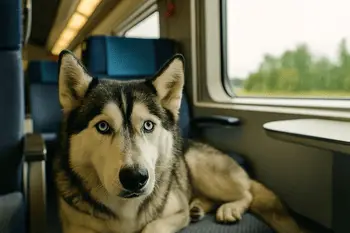
Traveling with pets has always been a challenge, especially for long-distance journeys.
Airlines impose strict rules, buses often lack proper facilities, and private cars can be inconvenient for cross-country trips.
Enter the high-speed rail pet transport service—a modern solution that is transforming how pet owners in China and beyond travel with their furry companions.
China’s recent upgrades to its pet transport service on high-speed trains have made headlines, offering more convenience, safety, and accessibility.
This guide explores everything you need to know about the service, its features, benefits, and practical tips for pet owners.
The Evolution of High-Speed Rail Pet Transport Service
Early Challenges
Traditionally, pets were not allowed in passenger cabins on trains in China.
Owners had to rely on cargo services, which often lacked transparency and comfort.
Concerns about safety, stress, and logistics discouraged many from traveling with pets.
Pilot Launch
In April 2025, China introduced a pilot program along the Beijing-Shanghai High-Speed Railway, allowing pets to travel in specially designed smart transport boxes.
This marked a turning point in pet-friendly travel.
Expansion
By December 2025, the service had expanded to 40 stations and 54 trains, covering major routes across eastern and southwestern China.
Key Upgrades in 2025
Booking Flexibility
- Reservations can now be made one day in advance instead of two.
- Bookings submitted before 12pm apply to the next day; after 12pm apply to the third day.
Increased Capacity
- Each passenger can now transport up to two pets, doubling the previous limit.
Smarter Ticketing
- A pet icon appears on eligible trains in the 12306 ticketing platform.
- A one-click filter helps passengers find pet-friendly routes.
Unaccompanied Pet Travel
- Pets can now travel without their owners, thanks to staff-monitored smart boxes.
How the Service Works
Smart Transport Boxes
Pets are placed in containers equipped with:
- Air circulation systems
- Temperature and humidity sensors
- Noise and odor control
Safety Checks
- Staff inspect compartments every two hours.
- Boxes remain secure throughout the journey.
Owner Preparation
- Familiar bedding and advance training help pets adjust.
- Positive feedback from owners highlights reduced stress.
Benefits of High-Speed Rail Pet Transport Service
Convenience
- Easy booking via the 12306 app.
- English interface available for foreign travelers.
Comfort
- Climate-controlled boxes ensure pets remain safe.
Accessibility
- Expanded routes cover popular travel corridors.
Tips for Pet Owners
Before the Journey
- Train your pet to stay calm in enclosed spaces.
- Pack familiar bedding or toys.
- Book tickets early to secure a spot.
During the Journey
- Ensure your pet has eaten lightly before departure.
- Provide hydration options.
- Stay in contact with staff if traveling unaccompanied.
Comparison Table
| Feature | Before Upgrade | After Upgrade |
|---|---|---|
| Booking | 2 days advance | 1 day advance |
| Pet Limit | 1 pet | 2 pets |
| Travel Options | Owner only | Owner or unaccompanied |
International Perspective
Global Trends
Countries like Japan and parts of Europe allow small pets in passenger cabins.
China’s approach—dedicated smart boxes—offers a unique model balancing safety and convenience.
Potential Expansion
If successful, the service could inspire similar systems in other countries with advanced rail networks.
Frequently Asked Questions
Q: Can pets travel in passenger cabins?
A: No, pets are transported in smart boxes within cargo compartments.
Q: Is the service available on all trains?
A: Not yet—only select routes marked with the pet icon.
Q: What types of pets are allowed?
A: Small domestic animals such as cats and dogs.
Conclusion
The high-speed rail pet transport service represents a major step forward in pet-friendly travel.
With smart technology, expanded routes, and flexible booking, it offers a safe and convenient way for pet owners to journey across China.
As demand grows, this service could set a global standard for integrating pets into modern transportation systems.
About the Author