China PR for Foreign PhD in Shenzhen (2026)
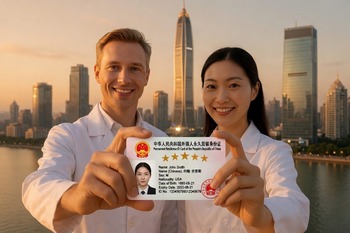
China’s permanent residence permit, widely known as the Chinese Green Card or Five-Star Card, is one of the most sought-after long-term residency options for foreigners.
It grants indefinite stay rights, visa-free multiple entry and exit, and many privileges similar to those enjoyed by Chinese citizens.
For highly educated professionals, particularly foreign PhD holders working in innovation-driven cities, Shenzhen stands out as a key destination with a dedicated fast-track pathway.
Shenzhen, often called China’s Silicon Valley, has become a magnet for global talent thanks to its booming tech sector, world-class universities, research institutions, and supportive policies for high-level professionals.
The city’s permanent residence program for foreign PhD holders was initially quite accessible but underwent tightening in mid-2025 to ensure stronger ties to local employers.
As of May 2026, these updated rules remain firmly in place.
This comprehensive guide walks you through every aspect of the Shenzhen PhD fast-track for permanent residence — from eligibility and documents to the application process, benefits, tips, and real-world considerations.
Whether you’re a researcher, academic, or tech specialist, this article will help you prepare confidently.
Who Can Apply? Main Eligibility Categories
Before diving into the PhD-specific route, it’s important to understand the broader framework for China’s permanent residence.
All applicants, regardless of category, must meet three fundamental requirements:
- They must abide by Chinese laws and regulations
- They must be in good health (verified by an official medical exam)
- They must have no criminal record (both from their home country and any time spent in China).
The main eligibility tracks include:
- Investment route: For those making substantial direct investments in China (typically USD 2 million or more nationally, with lower thresholds in certain regions) and maintaining clean tax records for at least three consecutive years.
- Employment / High-level Talent route: Usually requires holding senior positions (such as deputy general manager or associate professor level) for four consecutive years, with sufficient physical residence time in China and consistent tax payments.
- Family reunification: Spouses of Chinese citizens married for five or more years with actual residence in China, or other qualifying family connections.
- Outstanding Contribution / Special Talent: For individuals with notable achievements or those recommended under high-level talent programs.
The PhD fast-track in Shenzhen falls under a specialized talent category within the employment track.
It is designed specifically to attract and retain top academic and research talent without the stricter four-year senior-position requirement of the general employment route.
This makes it one of the more practical options for doctorate holders who are already working in the city.
Shenzhen PhD Fast-Track Requirements (Updated 2026)
Shenzhen’s policy for foreign PhD holders was updated in June 2025 to emphasize deeper integration with the local economy.
The changes remain current in 2026, with no further relaxations announced.
To qualify under the Shenzhen PhD fast-track, you must meet all of the following:
- Hold a valid doctoral degree (PhD or higher) from a recognized institution. Overseas degrees require official authentication through the China Service Center for Scholarly Exchange (CSCSE). Degrees from Chinese universities are generally accepted without additional authentication in Shenzhen.
- Be currently employed by a Shenzhen-registered enterprise or institution. This must be a full-time position with a legitimate work contract.
- Possess a minimum two-year employment contract with your Shenzhen employer. This is the key tightening introduced in 2025 — shorter contracts or rolling agreements typically do not qualify.
- Hold a valid Foreigner’s Work Permit (Category A, B, or points-based) and a current work-type residence permit issued by the Shenzhen Entry-Exit Administration.
- Actively work and reside in Shenzhen during the application period.
- Maintain good health and have no criminal record.
Important notes:
- Postdoctoral researchers are explicitly not eligible under this PhD fast-track at present. If you are finishing a postdoc, you would need to transition to a regular employment contract meeting the two-year requirement before applying.
- Your foreign spouse and unmarried children under 18 years old can apply concurrently as dependents. This family inclusion is one of the strongest advantages of the program.
- The policy applies to all foreign nationalities (not limited to ethnic Chinese), though overseas Chinese PhDs may sometimes find the documentation process smoother in practice.
This fast-track recognizes the value PhD holders bring to Shenzhen’s innovation ecosystem — from AI and biotech to advanced manufacturing and green technology.
Many applicants work at companies in Nanshan or Futian districts, at universities like Southern University of Science and Technology (SUSTech), or in research parks.
Why Shenzhen? Background and Appeal for PhD Talent
Shenzhen’s transformation from a fishing village to a global tech powerhouse happened in just four decades.
Today, it hosts headquarters for companies like Huawei, Tencent, BYD, and DJI, along with thousands of startups and research labs.
The city actively courts international PhD talent through events like the “同深共圳” Overseas PhD Pengcheng Tour, generous new-hire subsidies (up to RMB 100,000+ for qualifying doctors), and streamlined talent services.
The permanent residence fast-track is part of this broader strategy.
While the 2025 tightening added the two-year contract rule, it still offers a far quicker path to indefinite residency than the standard four-year senior-position route.
Successful applicants often describe it as a game-changer for long-term career stability, family planning, and access to local resources.
Detailed Required Documents for Shenzhen PhD Track
Preparing documents is the most time-consuming part of the process.
All foreign-language materials must be translated into Chinese by a certified translation agency.
Key items (health reports, non-criminal records, marriage/birth certificates, and degree authentications) must be issued or authenticated within six months of submission.
Main Applicant Documents:
Original + usually three copies of:
- Application Form for Permanent Residence in China for Foreigners — Available at the counter or downloadable. Fill it out neatly in Chinese or English.
- Recent photographs — Three bareheaded 2-inch (48×33mm) white-background photos, plus the digital photo receipt from the official photo service.
- Valid passport — Bio page plus any relevant visa/residence pages. Include a certified Chinese translation if needed.
- Health Examination Report — Issued by a designated hospital (commonly Huanggang Port or other approved facilities in Shenzhen). Must cover standard checks including infectious diseases.
- Non-criminal record certificates — One from your home country (notarized and authenticated) and one from China if you have resided here. Even long-term residents (10+ years) must provide the home-country certificate.
- PhD diploma and degree certificate — Plus CSCSE Authentication Report for overseas degrees. Domestic Chinese PhDs skip this step in Shenzhen.
- Valid Foreigner’s Work Permit — Current and unexpired.
- Employment contract — Must clearly show a minimum two-year duration, position, salary, and both parties’ signatures/seals.
- Official employment letter — From your Shenzhen company confirming your role, start date, and ongoing employment.
- Company supporting documents — Business License, recent Annual Inspection Report, and (for foreign-invested companies) Foreign Investment Approval Certificate or Record Filing Receipt.
- Personal Income Tax payment records — Demonstrating compliance. While not always strictly mandatory if you qualify under tax-treaty exemptions (e.g., certain UN experts or teachers), strong tax records significantly strengthen your application.
- Family Member Information Form and Information Collection Form — Templates provided at the application counter.
For Spouse (Adult Dependent):
- All main-applicant items 1–5 (form, photos, passport, health report, non-criminal record).
- Authenticated marriage certificate (Apostille for Hague countries or Chinese Embassy authentication, issued within six months).
For Children (under 18):
- Application form, photos, passport.
- Birth certificate or proof of parent-child relationship.
- Parents’ marriage certificate.
- Copies of both parents’ valid IDs or passports.
- Brief personal resumes/CVs for both parents.
The total volume of paperwork can exceed 100 pages when including copies and translations.
Many applicants hire a local immigration consultant or lawyer to organize and review everything — highly recommended to avoid delays.
Step-by-Step Application Process
- Prepare and authenticate documents (2–4 months): Start with degree authentication, police certificates, and marriage/birth legalizations. Book your health exam early.
- Gather employer support: Confirm your two-year contract is signed and obtain all company documents.
- Submit in person: Go to the Shenzhen Exit-Entry Administration Bureau at 4016 Jiefang Road, Luohu District (Grand Theater Metro Station, Exit D on Lines 1 or 2). Applications are accepted Monday–Friday during business hours (9:00–12:00 and 14:00–18:00).
- Initial review: Staff check completeness. You’ll receive a receipt.
- Higher-level review: The file moves to the Guangdong Provincial Public Security Department, then the National Immigration Administration (NIA) for final approval.
- Approval and card issuance: If approved, you’ll be notified to collect your Five-Star Card. Processing typically takes around 12 months, though some cases finish faster or slower depending on workload and completeness.
During the entire process, keep your work permit and residence permit valid. If your contract expires or you change jobs, the application may be paused or rejected.
Processing Time, Fees, and What to Expect
- Processing time: Approximately 12 months on average in Shenzhen (realistic range: 9–15 months).
- Fees: ¥1,500 application fee per person (non-refundable) + ¥300 for the physical card production. Dependents pay the same.
- Interim status: While waiting, you continue using your current work-type residence permit. No special interim card is issued.
Approval rates for well-prepared PhD applications are generally high when all criteria are clearly met, but incomplete files or weak employer ties can lead to requests for additional materials or outright rejection.
Benefits of Obtaining the Shenzhen Five-Star Card
Once approved, the rewards are substantial and life-changing for many families:
- Unlimited stay and travel freedom: Live in China indefinitely and enter/exit multiple times without visas or frequent renewals.
- Work flexibility: You can work for any employer (or start your own business) without needing a separate work permit. This is especially valuable in Shenzhen’s dynamic job market.
- Family and education advantages: Dependents gain similar rights. Children can attend local schools more easily, and family healthcare access improves.
- Banking, property, and daily life: Easier to buy property, open full banking accounts, obtain driver’s licenses, and access social insurance programs on par with locals (with some variations by district).
- Long-term stability: The card is renewable every 5–10 years with minimal paperwork. It also strengthens your profile for future opportunities like talent subsidies or even citizenship pathways in rare cases.
- Lifestyle in Shenzhen: Enjoy the city’s modern infrastructure, international schools, beaches, and vibrant expat communities while feeling truly settled.
Many Green Card holders report a profound sense of security — no more annual visa runs or uncertainty about contract renewals affecting residency.
Important Tips and Common Pitfalls to Avoid
- Timing is everything: Begin document authentication at least 4–6 months before you plan to apply. Delays here are the #1 reason for extended timelines.
- Contract stability: Your two-year contract must remain active throughout the application. Discuss any planned job changes with your employer and the Exit-Entry office first.
- Tax compliance: Even if exempt under a treaty, maintain clean records. Inconsistent tax filings raise red flags.
- Postdoc trap: If you’re currently a postdoc, secure a regular employment contract first.
- Professional help: Consider hiring a licensed immigration advisor familiar with Shenzhen’s PSB procedures. The small cost can save months of frustration.
- Stay informed: Policies can evolve. Regularly check the Shenzhen Exit-Entry Administration website or call +86 755 12367. Office hours are strict — plan your visit accordingly.
- Health and background checks: Schedule the medical exam at an approved facility and ensure your police certificates are recent.
- Family documents: Authentications for marriage and birth certificates must be fresh (within six months). Plan family travel or paperwork around this window.
Common mistakes include submitting outdated authentications, missing company documents, or assuming postdoc work counts toward eligibility.
Frequently Asked Questions (FAQs)
Yes — no CSCSE authentication is required in Shenzhen.
No. Any recognized PhD qualifies as long as you meet the employment conditions.
It depends. Tax-treaty exemptions (e.g., certain educators or UN-affiliated experts) may allow approval, but low salary without justification makes it harder. Strong tax records are always better.
Spouse: Yes (full set including authenticated marriage certificate). Minor children: No non-criminal record needed, but birth certificate and parents’ documents must be authenticated.
It’s risky. Your work permit and residence permit must remain valid during the entire process. Renew or extend first.
Absolutely — it is mandatory.
At least three months per year to maintain status (though enforcement is generally lenient for card holders).
Through the China Service Center for Scholarly Exchange (CSCSE) online portal: https://zwfw.cscse.edu.cn/
The core requirements are the same, but documentation (especially degree verification) can sometimes be simpler.
You will receive reasons in writing. You can address deficiencies and reapply once resolved.
Final Thoughts and Next Steps
Securing permanent residence in Shenzhen as a foreign PhD holder is a realistic and rewarding goal in 2026, provided you meet the two-year contract threshold and prepare meticulously.
The process rewards patience, organization, and strong employer support.
Once approved, the Five-Star Card opens doors to a stable, prosperous future in one of China’s most dynamic cities.
Start by reviewing your contract and gathering your degree authentication.
Reach out to your HR department for support letters and schedule a preliminary consultation at the Luohu Exit-Entry office if possible.
With careful planning, you can turn your academic achievements into long-term residency in Shenzhen.
For the latest updates, always consult official channels. If you have specific questions about your situation, feel free to reach out to qualified immigration professionals in Shenzhen.