Update Date: January 17, 2026
China’s accession to the Apostille Convention (1961) on March 8, 2023, marks a major change, simplifying the process for using foreign public documents in China and Chinese documents abroad.
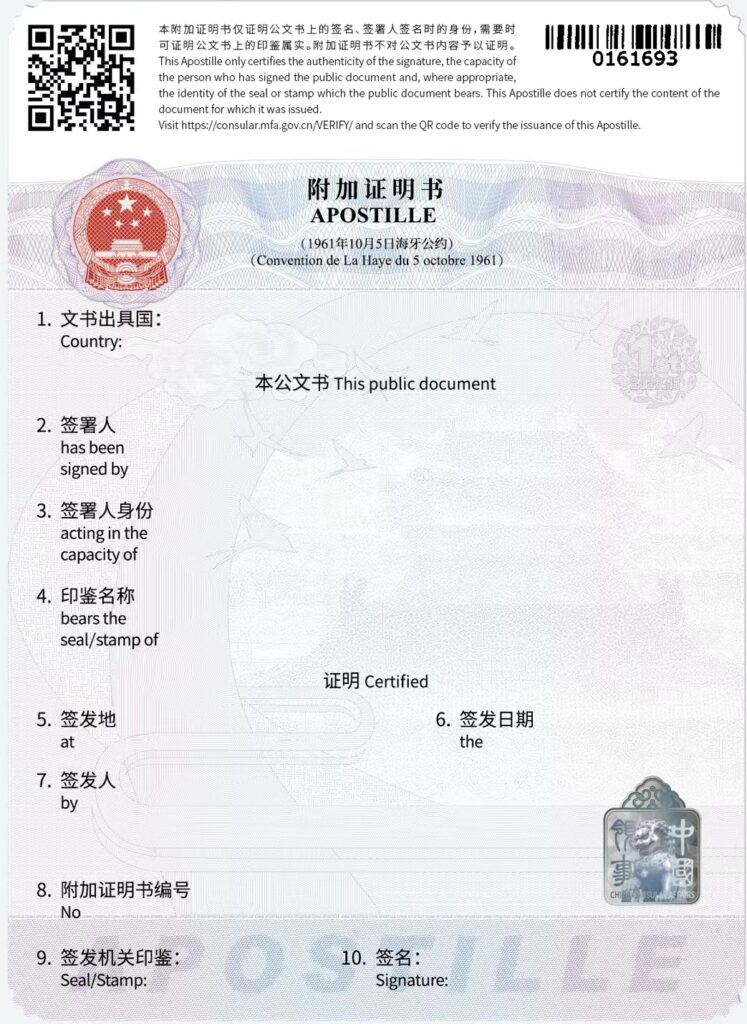
This guide merges the key announcement with actionable steps for obtaining an Apostille.
Firstly, for the most current information, check the latest notices from the Ministry of Foreign Affairs of China or consult with the relevant authorities before application.
1. What This Means: Key Changes and Benefits
The Apostille Convention replaces the traditional, lengthy chain of legalizations with a single Apostille certificate issued by a competent authority in the document’s country of origin.
- Effective Date: The convention took effect in China on November 7, 2023.
- Core Benefits: As stated by the Chinese Foreign Ministry, this move will:
- Save Time and Cost: Reduce document certification time from over 20 days to just a few working days, saving businesses an estimated over RMB 300 million annually in processing costs.
- Facilitate International Business: Simplify procedures for commercial documents, positively impacting over 70% of China’s export-related documents.
2. How to Obtain an Apostille in China
For documents issued in China that need to be used abroad, you must apply through China’s designated authorities.
Office Hours for Application Submission:
- Ministry of Foreign Affairs (Beijing) Service Window: Monday to Friday, 8:30 a.m. to 11:00 a.m. (excluding national holidays).
- Designated Local Foreign Affairs Offices: Typically Monday to Friday, 8:30 a.m. to 11:00 a.m. and 1:30 p.m. to 4:00 p.m. (excluding holidays).
Processing Time:
- Regular Service: 4 business days after document receipt.
- Expedited Service: 2 business days after document receipt.
3. Application Process & Methods
Step-by-Step Process:
- Prepare a notarized document from a Chinese notary public.
- Apply for the Apostille at the Ministry of Foreign Affairs or its designated local foreign affairs office. A list of local offices is available on the Ministry’s website.
Application Methods:
| Applicant Type | Primary Application Channel |
|---|---|
| Business Applicants | Use the online system at http://lsrz.cs.mfa.gov.cn. Fill out and print the form before window submission. |
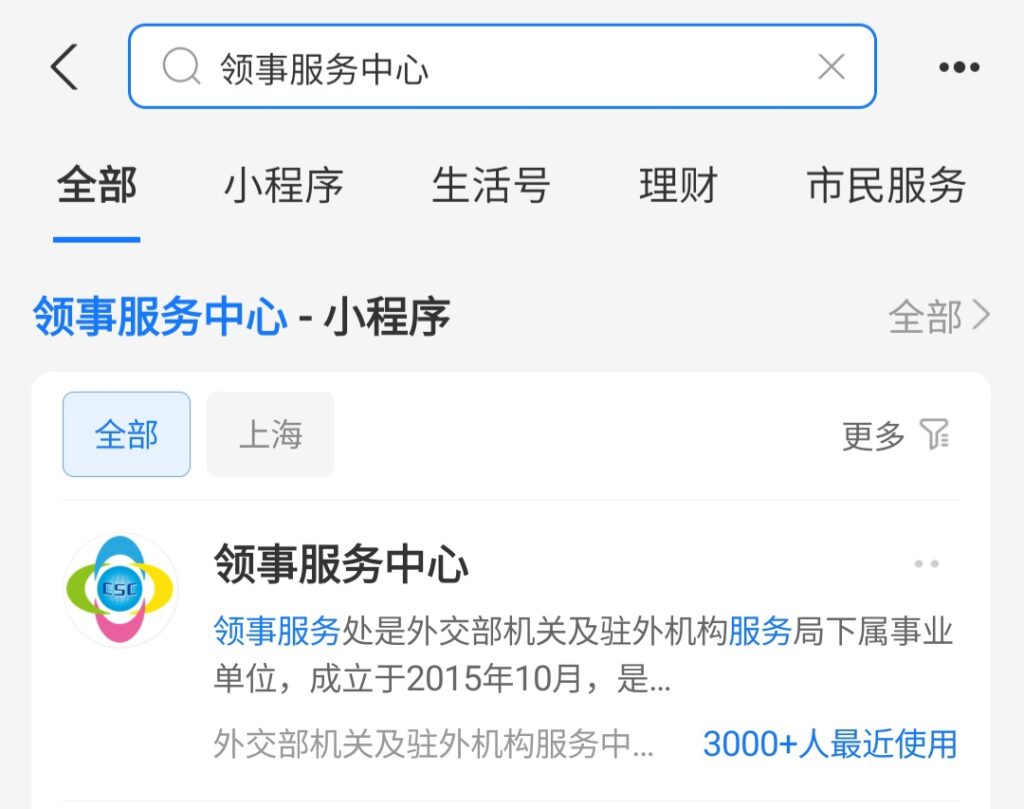
| Individuals (Civil Documents) | Use the “Consular Service Center” (领事服务中心) mini-program on Alipay to make an appointment and submit by window or mail. |
| Alternative Option | Applications can also be submitted via authorized local agencies in Beijing or at local foreign affairs offices. |
4. Required Documents & Fees
Key Required Documents:
- Completed Application Form (generated online).
- Original Document requiring the Apostille.
- Identification:
- Chinese citizens: Mainland ID card and copy.
- Foreign citizens: Passport and copy of information page.
- Hong Kong/Macao/Taiwan residents: Corresponding Mainland Travel Permit and copy.
- Additional documents may be required for specific cases such as business documents, state-sponsored travel, foreign diplomatic missions, international adoptions.
Fee Schedule:
| Service Type | Fee (per document) |
|---|---|
| Regular Service (Business Document) | 100 yuan |
| Regular Service (Civil Document) | 50 yuan |
| Expedited Service Surcharge | +50 yuan per document |
| EMS Domestic Mail Fee | 25 yuan per 500 grams |
Important Notes:
- Fees are calculated per notarized item. Bound items such as degree and its translation are charged separately.
- Full payment is required upon application.
5. Contact Information
- General Inquiry Line (Ministry of Foreign Affairs): 010-65889761
- Local Foreign Affairs Offices: For contact details of offices outside Beijing, please refer to the official list on the Ministry of Foreign Affairs website.
- Official Online Verification Portal: https://consular.mfa.gov.cn/VERIFY/
Summary
By joining the Apostille Convention in November 2023, China has greatly streamlined cross-border document authentication.
As a result, the Ministry of Foreign Affairs and its local offices centralize the process, which features clear procedures and requirements for all users.
Therefore, this reform directly supports China’s objectives of enhancing its business climate and fostering international exchanges.
About the Author