
China Visa & Talent Policy Updates: June 2026 Roundup
In June 2026, China’s visa and talent framework continues to evolve, with important implications for foreign professionals in Shanghai and beyond.
Key topics include the treatment of existing Class A work permits, streamlined access to the Shanghai Overseas Talent Residence Permit, practical guidance on changing employers, and the extension of visa-free travel for Russian passport holders.
This roundup builds on the updates we covered in our January 2026 China Visa Policy Updates. It explains who is affected, what the changes mean in practice, and how to prepare.
It includes updated salary benchmarks, a quick-reference table, actionable checklists, and links to official sources.
Why These Updates Matter
China’s talent policies directly influence hiring, compensation planning, family relocation, and long-term settlement decisions in Shanghai.
Clear procedures for permit extensions and job changes help employers and employees avoid gaps in legal status.
For travelers, the extended Russia visa-free arrangement simplifies short business and personal trips.
Quick Reference: June 2026 Key Changes
| Policy Area | Key Change & Action |
|---|---|
| Class A Work Permit Salary Threshold | Change: Strict enforcement of the 6× local average wage rule continues in Shanghai (≈ RMB 74,604/month or ~RMB 895,248/year). Action: Existing permits approved under earlier rules can often be extended on original terms. New hires must meet current thresholds. Confirm your permit’s original approval basis. |
| Shanghai Overseas Talent Residence Permit | Change: Category A work permit holders can apply directly for this permit. Action: Evaluate eligibility and apply through the Shanghai talent office to access broader rights and family benefits. |
| Job / Employer Changes | Change: Standard process requires cancelling the current permit and having the new employer apply for a new one. Intra-Shanghai changes near expiry may qualify for a streamlined amendment in practice. Action: Plan transitions early. Confirm exact documentation requirements with your district HRSS or talent office before giving notice. |
| Russia Visa-Free Policy | Change: Unilateral visa-free entry for ordinary Russian passport holders extended until 31 December 2027 (30 days per entry). Action: Russian travelers should prepare standard entry documents and check local registration rules if staying longer. |
1. Shanghai Class A Work Permit Extensions & Salary Rules
Since February 2026, Shanghai (and Beijing) have applied stricter verification of the salary-based route for Category A (High-End Talent) work permits.
The current benchmark is approximately RMB 74,604 per month (roughly RMB 895,248 annually), based on 6× the local average social wage.
Practical implications:
- Existing holders: Many can extend using the standards in place when their permit was originally issued.
- New applicants: Compensation packages must meet the current published threshold. Shortfalls usually result in rejection or reclassification to Category B.
- Employers should align contracts, payroll records, and tax filings with the declared salary.
Employer & HR Checklist
- Identify which current Class A employees were approved under earlier (lower) salary criteria.
- Update offer letters and employment contracts for new Category A roles.
- Maintain clear payroll and tax documentation for future extensions or audits.
- Check district-level interpretations with your local HRSS bureau.
2. Shanghai Overseas Talent Residence Permit – Direct Route for Class A Holders
Foreign nationals holding a Category A work permit can apply directly for the Shanghai Overseas Talent Residence Permit (effective 1 July 2025 – 30 June 2030).
This is one of the most attractive benefits currently available in Shanghai.
Key benefits:
- Residence and work rights for the holder
- Dependent permits for spouse and children (spouse work rights + school access)
- Social insurance and Housing Provident Fund participation
- Support for business setup and certain government employment
- Facilitated customs clearance, driver’s license, and vehicle plate allocation in some cases
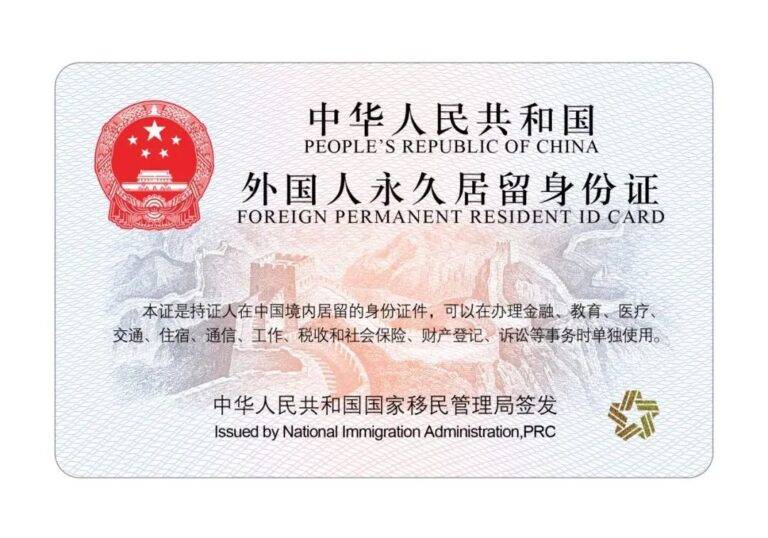
- Clearer pathway toward permanent residence (Green Card)
How to apply:
The employer usually submits via Shanghai’s official government service platform.
Processing has been streamlined (typically 5 working days for review + permit production within 10 working days).
Family tip:
Start school enrollment and social insurance registration planning as soon as the permit is approved.
3. Changing Employers: Procedures and Practical Tips
The standard process when switching jobs in China is:
- Cancel the current work permit.
- New employer submits a new work permit application.
- Employee starts the new role only after approval.
Intra-Shanghai changes (practical notes):
When a work permit is nearing expiry, some districts allow a streamlined amendment/modification route rather than full cancellation + re-application.
This can reduce the documents required (e.g., police clearance, medical exam, or degree authentication may be waived in certain cases).
Timing is important — act while the current permit is still valid.
Inter-city transfers usually require more documentation and coordination between cities.
Strong recommendation:
Always confirm the exact requirements and timing with your current and new employer’s HR teams and the relevant district talent/HRSS office before giving notice.
Gaps in legal status can create complications.
4. Russia Visa-Free Entry Extended to 31 December 2027
China has extended its unilateral visa-free policy for ordinary Russian passport holders until 31 December 2027.
Eligible travelers may stay up to 30 days per entry for business, tourism, visiting family/friends, exchanges, or transit.
Russia has reciprocated with extensions for Chinese citizens.
Practical notes for travelers and companies:
- Carry proof of onward travel, accommodation, and sufficient funds (immigration officers may request them).
- Some cities still require temporary residence registration for longer short-term stays — check locally.
- For assignments longer than 30 days, the appropriate visa or work permit is still required.
Frequently Asked Questions
Yes. Category A holders are eligible to apply directly. Contact the Shanghai Talent Work Bureau or your district office for the latest document list and submission channel.
You will likely need to follow the standard cancellation + new application process. This can extend timelines, so plan ahead with both employers.
Yes, business is an allowed purpose, but the 30-day limit per entry still applies.
In many cases, no. Permits originally approved under earlier rules can often be extended using the standards in place at the time of issuance. Always confirm your specific situation with the issuing authority.
No. It is a long-term residence permit (usually 1–5 years, sometimes up to 10 years) that offers many benefits and can serve as a stepping stone toward permanent residence, but it is not indefinite like the Chinese Green Card.
Employer Action Plan
- Audit current Class A employees and note which permits were issued under earlier salary rules.
- Align new offer packages with current Shanghai salary thresholds.
- Brief HR on the direct Overseas Talent Residence Permit route for qualifying staff.
- Establish clear internal processes for job transitions to minimize legal gaps.
- Support families with dependent permit and schooling guidance.
Employee Checklist
- Confirm whether your current Class A permit was approved under pre-2026 salary criteria.
- Keep passport, medical exam, police clearance, and degree documents up to date.
- Coordinate start dates with your new employer to avoid status gaps.
- If moving family, prepare dependent permit documents early.
- For complex or inter-city moves, consult a visa specialist.
Official Sources
- Ministry of Foreign Affairs of China — fmprc.gov.cn
- Shanghai Municipal Human Resources and Social Security Bureau — rsj.sh.gov.cn
- National Immigration Administration — nia.gov.cn
- Embassy of the Russian Federation in China — china.mid.ru
Final advice
District-level implementation in Shanghai can vary. Always cross-check the latest requirements with your local HRSS bureau or a trusted immigration advisor before submitting applications.
Policies and processing practices continue to evolve.